Basic information about the project
With the transition from coal to natural gas, further ash production was halted, but the inherited problem of improperly disposed industrial waste remains unresolved. Over several decades of using coal as the primary energy source in the district heating system, approximately 61,000 tons of ash and slag were deposited at the heating plant site in Kragujevac. This temporary landfill, located in close proximity to urban areas, poses a significant environmental risk, especially during dry and windy days when ash particles are dispersed into the air.
Residents of neighborhoods near the heating plant, such as Stanovo, Erdoglija, and parts of central Kragujevac, have been exposed for years to the negative impacts of the deposited ash, which is easily spread by the wind and reaches residential zones. Particularly vulnerable groups include children, the elderly, and people with respiratory illnesses, who are most at risk from this type of pollution. The health and environmental risks also extend to employees working within the heating plant and nearby facilities, who are in daily direct contact with the source of pollution. Additional concern arises from the fact that the temporary landfill is located only about 500 meters from the Lepenica River, raising the possibility that, during rainfall and surface runoff, contaminants could enter the watercourse, threatening water quality and the broader natural ecosystem.
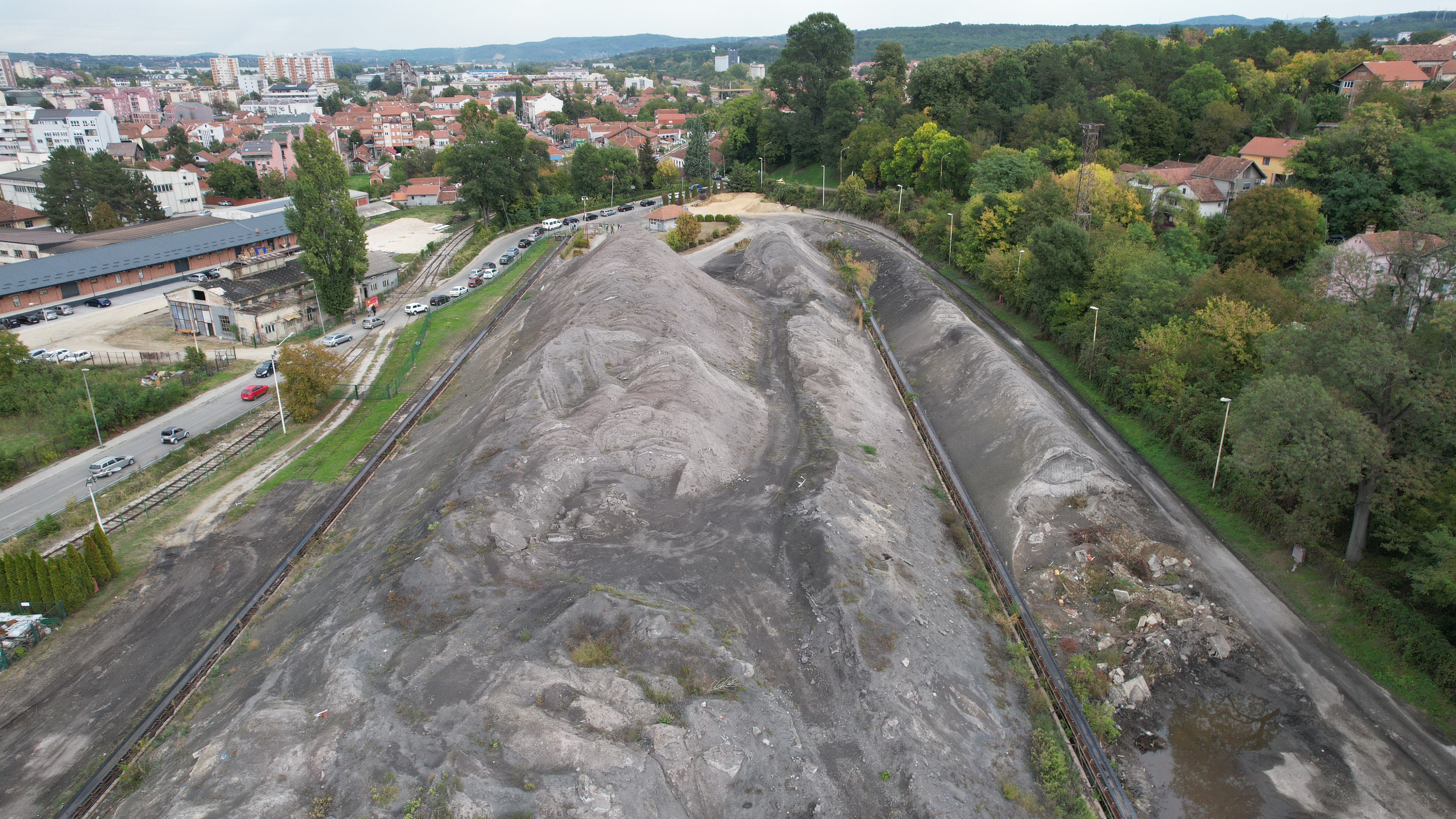
The project “Management and Reuse of Ash from the Heating Plant in Kragujevac” is the result of a joint initiative by the Ministry of Environmental Protection and the City of Kragujevac, who recognized the importance of permanently resolving this decades-old issue. Thanks to their cooperation and strategic approach, funding and institutional support for project implementation have been secured.
With the secured funding and technical readiness of the project, all preconditions have been met for the final resolution of the ash landfill issue. The project has been designed in accordance with national regulations and the principles of the circular economy, whereby the ash will be transported and reused in the construction materials industry.
For this purpose, the ash will be gradually transported from the heating plant site in Kragujevac to cement factories in Serbia, where it will be used as an additive in the clinker and cement production process.
This approach allows for the reduction of natural resource use, a decrease in CO₂ emissions, and contributes to sustainable development goals through the circular use of industrial waste. In addition, this project directly contributes to: improving air quality in the urban area of Kragujevac, addressing the issue of unmanaged industrial landfills, and protecting public health and enhancing the environment.